POLICY ADVOCACY CENTER
At the Center for Elder Law & Justice, we are dedicated to ensuring that every individual can live with dignity, independence, and security. While realizing this vision is an ongoing journey, meaningful change starts with informed dialogue and collective action.
Public policy shapes nearly every aspect of aging, from access to safe housing and quality healthcare to financial stability and protection from abuse. That is why we are deeply engaged in policy advocacy that amplifies the voices of older adults, caregivers, and communities too often left out of decision-making.
We work alongside older adults and supporters to advance policies that promote justice, equity, and the ability to age safely in the community of one’s choice. Through legislative advocacy, budget priorities, public testimony, and education, we push for reforms that prevent elder abuse, address financial exploitation, strengthen long-term care protections, and expand access to essential supports.
We believe that change happens when people are informed, engaged, and empowered. In the Policy Advocacy Center, you’ll find the issues we’re working on, opportunities to speak out, and ways your voice and lived experience can help shape policies that impact New Yorkers today and for generations to come. We invite you to explore, stay informed, and join us in advancing justice and equity for older adults and vulnerable communities across New York.
ACTION CENTER
The Action Center provides tools, resources, and opportunities for the public to engage in advocacy and advance policies that promote justice for older adults.

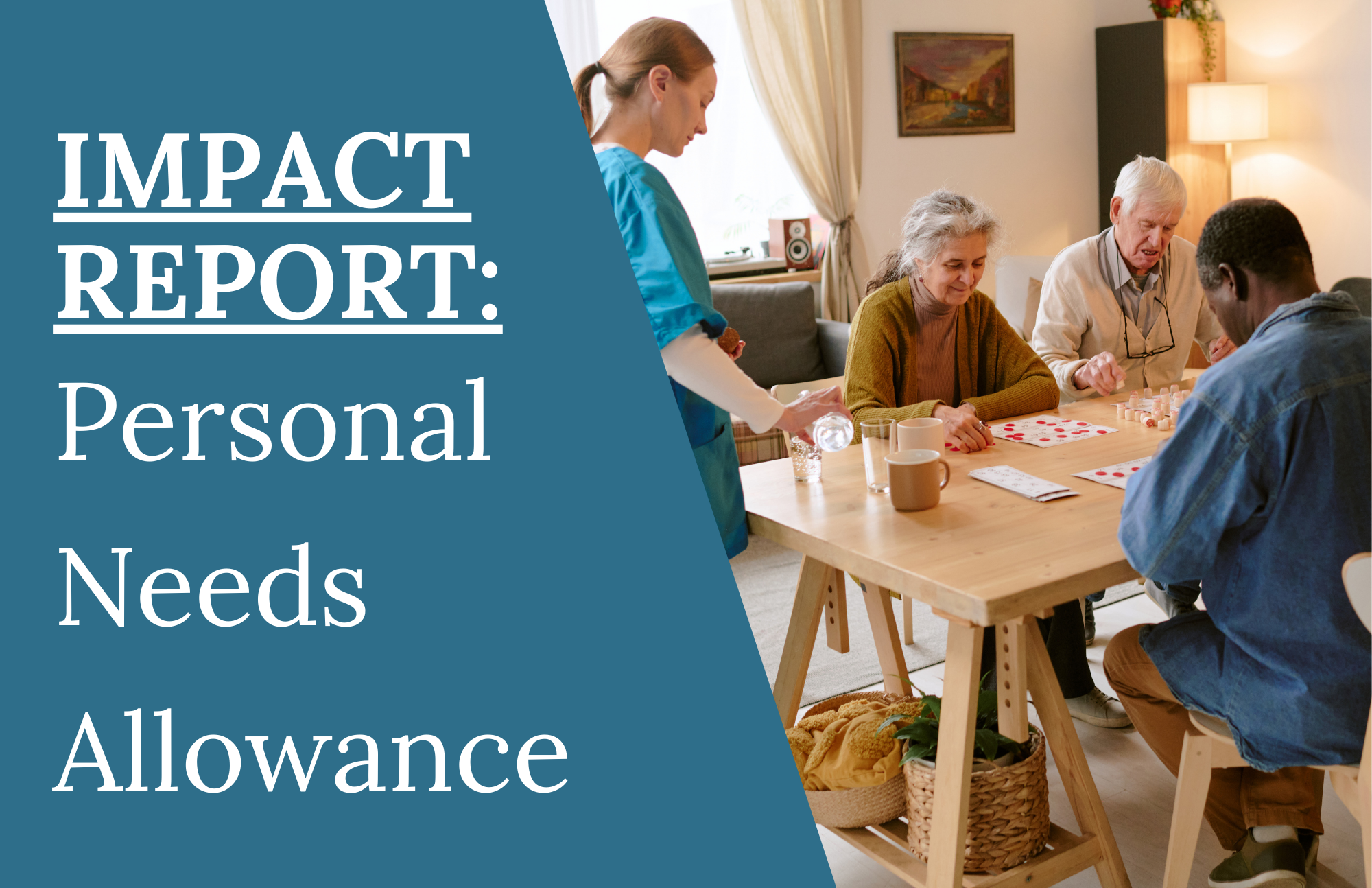
$50 is the amount of money nursing home residents are allowed to keep of their income. This was set in 1988 and has not been increased since. In partnership with the NYS LTCOP, we launched a “Share Your Story” campaign and gathered more than 1,200 impact statements from nursing home residents, the results of which are reflected here.
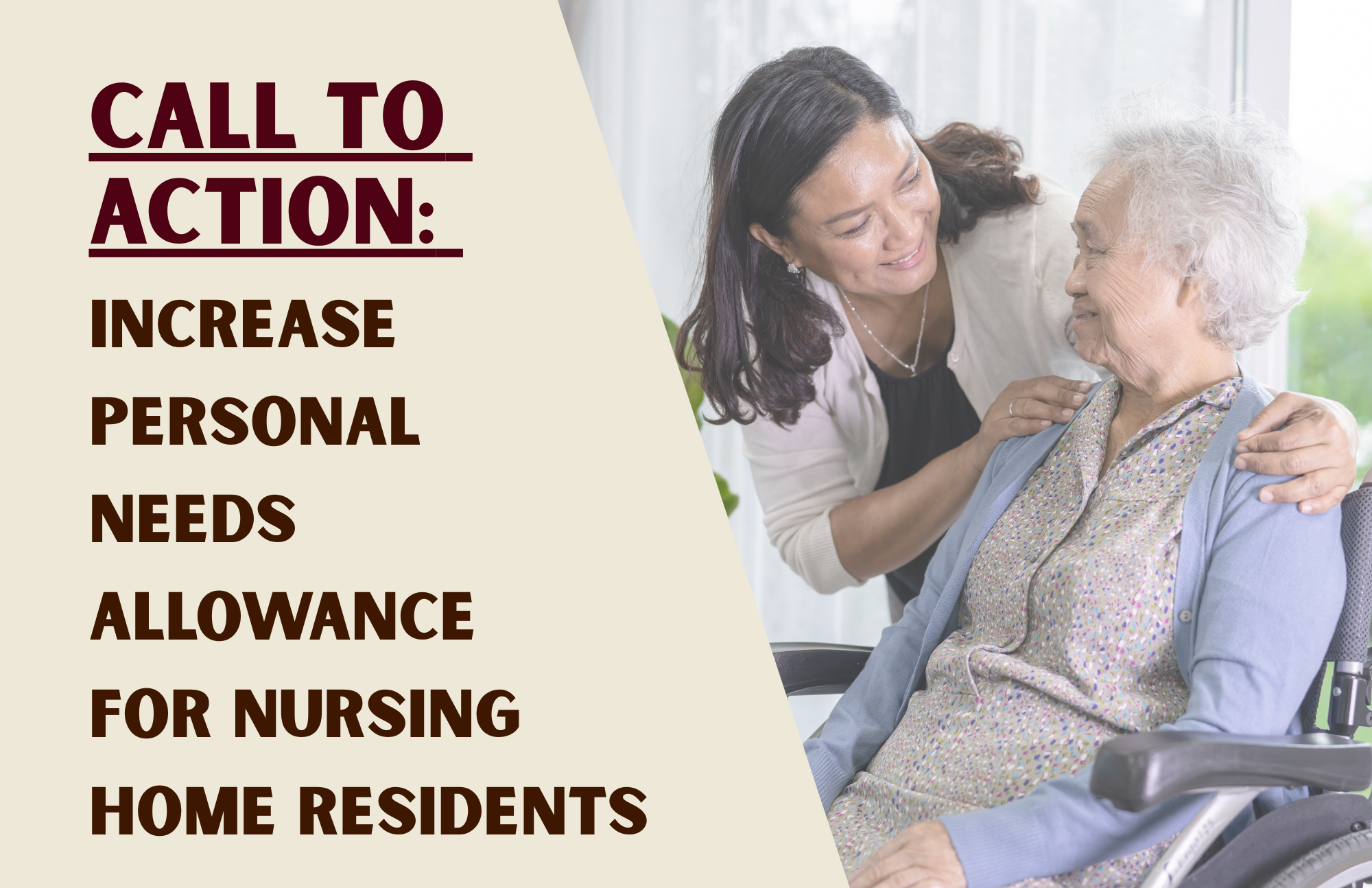
The Personal Needs Allowance (PNA) is the small portion of income that nursing home residents may keep each month to pay for essential personal items that are not covered by Medicaid. The PNA is $50 and has not been adjusted or increased since 1988
Thank you for the opportunity to provide testimony today on the Statewide Central Register of Child Abuse and Maltreatment, and the reporting process. The Center for Elder Law & Justice (“CELJ”) has been serving the Western New York region for over 45 years, providing free civil legal services to older adults, persons with disabilities, and low-income families. CELJ’s primary goal is to use the legal system to ensure that individuals may live independently and with dignity. CELJ also advocates for policy and systems change, particularly in the areas of elder abuse prevention, nursing home reform, consumer protection, and housing reform. Currently, CELJ provides full legal representation in ten counties of Western New York. CELJ’s Free Senior Legal Advice Helpline is open to all of New York State.

Thank you, Chair Krueger and Chair Weinstein, for the opportunity to submit this
testimony to the Joint Legislative Budget Hearing on Public Protection. We present this written
testimony on behalf of Karen Nicolson , CEO of the Center for Elder Law & Justice

The Center for Elder Law and Justice (CELJ) greatly appreciates the opportunity to provide our
comments to the Joint Legislative Budget Committee on Economic Development. CELJ has been
serving the Western New York region for over 40 years, providing free civil legal services to older
adults, persons with disabilities, and low- income families. CELJ’s primary goal is to use the legal
system to assure that individuals may live independently and with dignity. CELJ also advocates
for policy and systems change, particularly in the areas of housing, elder abuse prevention, nursing
home reform, and consumer protection. Currently CELJ provides full legal representation in ten
counties of Western New York. CELJ’s Free Senior Legal Advice Helpline is open to all of New
York State. CELJ operates a central office in downtown Buffalo, with three additional offices in
Cattaraugus, Chautauqua, and Niagara counties.

Thank you, Chair Krueger and Chair Weinstein, for the opportunity to submit this testimony to the
Joint Legislative Budget Hearing on Public Protection. We present this written testimony on behalf
of Karen Nicolson, CEO of the Center for Elder Law & Justice. The Center for Elder Law &
Justice (“CELJ”) has been serving the Western New York region for over 40 years, providing free
civil legal services to older adults, persons with disabilities, and low- income families. CELJ’s
primary goal is to use the legal system to assure that individuals may live independently and with
dignity. CELJ also advocates for policy and systems change, particularly in the areas of housing,
elder abuse prevention, nursing home reform, and consumer protection. Currently CELJ provides
full legal representation in ten counties of Western New York. CELJ’s Free Senior Legal Advice
Helpline is open to all of New York State. CELJ operates a central office in downtown Buffalo,
with three additional offices in Cattaraugus, Chautauqua, and Niagara counties.

Thank you, Chair Krueger and Chair Weinstein, for the opportunity to submit this testimony to
the Joint Legislative Budget Hearing on Housing. This testimony is presented by Kevin M.
Quinn, Director of Impact Litigation at the Center for Elder Law & Justice. The Center for Elder
Law & Justice (“CELJ”) has been serving the Western New York region for over 40 years,
providing free civil legal services to older adults, persons with disabilities, and low-income
families. CELJ’s primary goal is to use the legal system to assure that individuals may live
independently and with dignity. CELJ also provides for policy and systems change, particularly
in the areas of housing, elder abuse prevention, nursing home reform, and consumer protection.
Currently, CELJ provides full legal representation in ten counties of Western New York. CELJ’s
Free Senior Legal Advice Helpline is open to all of New York State. CELJ operates a central
office in downtown Buffalo, with three additional offices in Cattaraugus, Chautauqua, and
Niagara counties.

Thank you for the opportunity to provide testimony on the Fiscal Year 2024-2025 Executive
Budget (“Executive Budget”). The Center for Elder Law & Justice (“CELJ”) has been serving the
Western New York region for over 40 years, providing free civil legal services to older adults,
persons with disabilities, and low-income families. CELJ’s primary goal is to use the legal system
to assure that individuals may live independently and with dignity. CELJ also advocates for policy
and systems change, particularly in the areas of housing, elder abuse prevention, nursing home
reform, and consumer protection. Currently CELJ provides full legal representation in ten counties
of Western New York.1 CELJ’s Free Senior Legal Advice Helpline is open to all of New York
State. CELJ operates a main office in downtown Buffalo, with three additional offices in
Cattaraugus, Chautauqua, and Niagara counties.
Policy in Plain Language
Accessible guidance and practical resources to help you understand how laws and budgets affect older adults in New York State. Our plain-language blogs, fact sheets, and policy materials are designed to inform, empower, and protect older adults.
Advocacy is about speaking up. It is not about elections or political parties.
Policy advocacy means sharing your experiences, concerns, and ideas to help shape laws, rules, and funding decisions. It is how everyday people help improve the systems that affect their lives.
At its heart, advocacy connects real-life experiences to public decision-making.

Asking for change is a powerful first step. Whether you’ve signed a petition, met with lawmakers, or shared your story, your voice matters. But real change often depends on what happens next, especially when money is involved. To turn ideas into action, those proposals need to be included in the New York State budget. That’s where the real work begins.

Understanding how laws are made in New York State is crucial for every engaged New Yorker, particularly those advocating for vulnerable populations, such as older adults. While the legislative process may seem complex at first glance, gaining a basic understanding of how it works and how to participate can empower individuals and communities to shape public policy directly.
Policy Testimony
Policy Testimony documents our official testimony before legislative and regulatory bodies on key policy issues affecting the communities we serve.
We are deeply concerned that the Governor’s Executive Budget did not include full appropriation authority for the Interest on Lawyer Account (IOLA) Fund. The Executive budget included $77.5 million, far short of the $102.5 million IOLA requested, and was approved by IOLA’s Board of Trustees.
IOLA is a critical funding source for civil legal services for low-income New Yorkers. This funding is not taxpayer money; it is generated through interest on attorney escrow accounts for the sole purpose of supporting civil legal services statewide as prescribed in statute. The full amount of money needed is currently in IOLA’s accounts.
The Legislature must fight for a Budget that not only views and includes older adults and persons with disabilities as a part of the community, but ensure that all persons, regardless of their age, disability, race, geographic location, and income are able to age with independence, dignity and safety. New York State must take measures that ensure every New Yorker can thrive.
Older adults have spent a lifetime building, supporting, and sustaining our communities, yet they remain largely invisible in the proposed Budget and the Executive’s goal to create a stronger, safer, and more affordable New York.
New York has strong legal protections that entitle individuals access to adult guardianship services when a court finds the appointment of a guardian is necessary. However, this mandate is underfunded. Without a direct and sustainable funding stream to ensure the availability of high-quality guardianship services, persons who have been determined by a court to need a guardian are at risk. Investing in a Statewide Initiative of Nonprofit Guardians will ensure all New Yorkers who need a surrogate decision-maker have access to qualified, person-centered care, regardless of their financial or social circumstance.
Testimony to the New York State Senate Standing Committee on Health and Senate Standing Committee on Investigations and Government Operations
POLICY positions
Policy Positions are our official perspectives on legislative and policy matters and serve as a foundation for our advocacy efforts.
The Center for Elder Law and Justice supports the Consumer Debt Uniformity Act (CDUA), which would expand protections already in place for consumers in lawsuits involving consumer credit transactions to all forms of consumer debt.
The Center for Elder Law & Justice (CELJ) supports the CREEP Act, which modernizes New York’s stalking laws by expanding access to civil orders of protection for all victims of stalking, regardless of their relationship to the perpetrator.
The Center for Elder Law & Justice is pleased to sign on to the following letter of support, joining AARP New York and other organizations, encouraging New York State Legislators to support budget legislation proposed by Governor Kathy Hochul aimed at drug price transparency.
policy news
Policy News provides timely information on current policy developments, legislative changes, and advocacy initiatives relevant to older adults and caregivers.
The Center for Elder Law & Justice spent the 2026 legislative session advocating for policies that protect older adults, people with disabilities and vulnerable New Yorkers. The Legislature adjourned its 2026 session in June. Several important bills are awaiting Governor Hochul’s signature. While meaningful progress was made on legislation that promotes and supports older adults in their right to live independently and with dignity, more work must be done.
The Center for Elder Law & Justice (CELJ) advances its mission to improve the quality of life for older adults, people with disabilities, and low‑income individuals by ensuring they can live independently and with dignity through free civil legal services. As we present our 2026 New York State Priorities, we do so grounded in this commitment to justice, safety, health and economic security for the communities we serve.

A personal needs allowance (PNA) is the monthly stipend that Medicaid recipients who live in nursing homes are allowed to keep from their income to spend on personal items and services
policy archives
The Policy Archives house a comprehensive record of prior policy briefs, updates, and related materials to support research and informed advocacy.
Your Story Matters
Your voice provides real-world insight that guides our work and helps us communicate more effectively with policymakers. Help us make a difference by sharing your story!