
HEALTH Unit
The Center for Elder Law & Justice Health Unit provides free assistance with a wide range of health insurance and long‑term care concerns. Our attorneys and paralegals offer guidance, answer questions, and advocate on your behalf to help you navigate complex systems with confidence. Ensuring that vulnerable individuals can access and maintain essential health coverage is a core part of our mission. The Health Unit works to protect continuity of care and to make sure every client receives the benefits and support they need. To find out if you qualify for services, please contact us at 716-853-3087.
Age 60 or older, regardless of income or disability status
Age 18 or older with a disability
Resident of Erie, Niagara, Orleans, Genesee, Wyoming, Chautauqua, Cattaraugus or Allegany county
Some eligibility exceptions may apply, please contact our office to determine eligibility status.
Program Eligibility
Improving the quality of care in skilled nursing facilities or in-home settings
Transitioning safely back home after a stay in a nursing or rehabilitation facility
Increasing the type or amount of health care services you receive at home
Health insurance advocacy and support, including eligibility and renewal help, managed care enrollment or disenrollment, resolving coverage denials or service reductions, handling prior authorization disputes, and full representation at fair hearings.
Appeals for denied, reduced, or terminated health care coverage, including both Medicaid and Medicare
We can assist with…
Our team provides legal assistance with the following issues:
Discharges and evictions from nursing homes and adult care facilities
Explaining resident rights in nursing homes or adult care facilities
Advance planning documents, including Powers of Attorney and Health Care Proxies, for residents of Erie County facilities who are at or below 200% of the federal poverty level
Educational presentations on topics such as resident rights in nursing homes and assisted living facilities, please contact 716-853-3087 to schedule.
For direct resident advocacy, please see the Long-Term Care Ombudsman Program section below.
Long Term Care Resident Advocacy
Long Term Care Ombudsman Program
The Long Term Care Ombudsman Program (LTCOP) is a vital advocate and resource for older adults and individuals with disabilities living in nursing homes, assisted living facilities, and other licensed adult care homes. Ombudsmen in the Long Term Care Ombudsman Program are professionally trained and certified volunteer advocates who play a critical role in protecting the rights and well-being of residents in long-term care facilities. They investigate and work to resolve complaints made by or on behalf of residents, promote the formation and growth of resident and family councils, and serve as an important bridge between residents, government agencies, care providers, and the public. Their goal is not only to address individual concerns but also to bring about broader, system-level changes that improve the quality of care and quality of life for all residents.
Mandated by the Older Americans Act, the New York State LTCOP oversees 15 regional programs across the state. In Region 15—which includes Cattaraugus, Chautauqua, Erie, and Niagara Counties—the program is hosted by People Inc. We are proud to partner with People Inc. as their legal liaison, providing dedicated legal support to the program and its volunteers.
Become an Ombudsman Volunteer
Ombudsman volunteers serve as compassionate advocates who help resolve concerns raised by or on behalf of residents in long-term care settings. Volunteers work to improve both quality of care and quality of life for residents. To become an ombudsman, volunteers must complete a free certification course provided by People Inc.
For more information or to sign up, please contact Susan Fenster, Coordinator, NYS Region 15 Long Term Care Ombudsman Program at 716-817-9222
Frequently Asked Questions
How can I get the care I need to stay in my home?
Many older and disabled individuals want to stay in their homes or apartments, but need help and skilled nursing care to safely remain at home. A Medicaid Managed Long Term Care Plan (MLTC) can provide these services to you in your home if you qualify. CELJ helps its clients understand the benefits of an MLTC, and will work with your plan to help you receive the care you need to stay in the community.
I have Medicare, why am I receiving a bill?
Having Medicare does not always mean that it will pay for all claims or hospital stays. Unfortunately, many Medicare recipients do find themselves facing large health care bills. This often happens after receiving inpatient rehabilitation in a skilled nursing facility, or after an ambulance transport. You have the right to appeal claim denials. Our attorneys can review your medical bills, and can represent you throughout the appeals process where appropriate. If you believe that a claim has been wrongly denied, you can contact our office to see if you qualify for assistance.
My spouse is in a nursing home but I live at home. Why do we have to give our income to the nursing home if we have Medicaid?
Medicaid can help cover the high costs of nursing home care, but if you make more than the monthly income limit, you will have to contribute towards the cost of your care. Spousal budgeting for Medicaid is very complex and varies based on individual circumstances. We help our clients make informed decisions about how to budget their income and resources to make sure the spouse living in the community has enough money to maintain their home, while also ensuring that the spouse living in a nursing home has everything they need as well. If you disagree with any determination made by the Department of Social Services regarding your Medicaid coverage or budgeting, contact our office to see if you qualify for assistance.
How do I know who the ombudsman is?
Anyone who has questions or concerns pertaining to the care/treatment in a nursing home or assisted living facility can contact the Ombudsman program. For nursing homes and assisted living facilities in Cattaraugus, Chautauqua, Erie, and Niagara Counties, please contact People Inc. at 716-817-9222. For inquiries outside our covered counties, please contact the State LTCOP program at 1-855-582-6769.
Will the LTCOP help me sue a nursing home or other facility?
No. Ombudsmen work to promote and protect the rights of nursing home and assisted living residents. Ombudsman work with residents, their family, facilities, and other interested parties to address concerns of residents. In situations where the Ombudsman is unable to resolve a resident complaint, the LTCOP will link the resident to the appropriate resource for further assistance.
What kind of problems do ombudsmen help with?
Ombudsmen respond to any concern, complaint, or problem a resident may have. Common problems include: quality of care, visitation rights, diet/food, and resident rights. Confidentiality is the cornerstone of the LTCOP and all resident concerns, complaints, or problems remain confidential unless the resident consents to disclosure.

Additional Resources
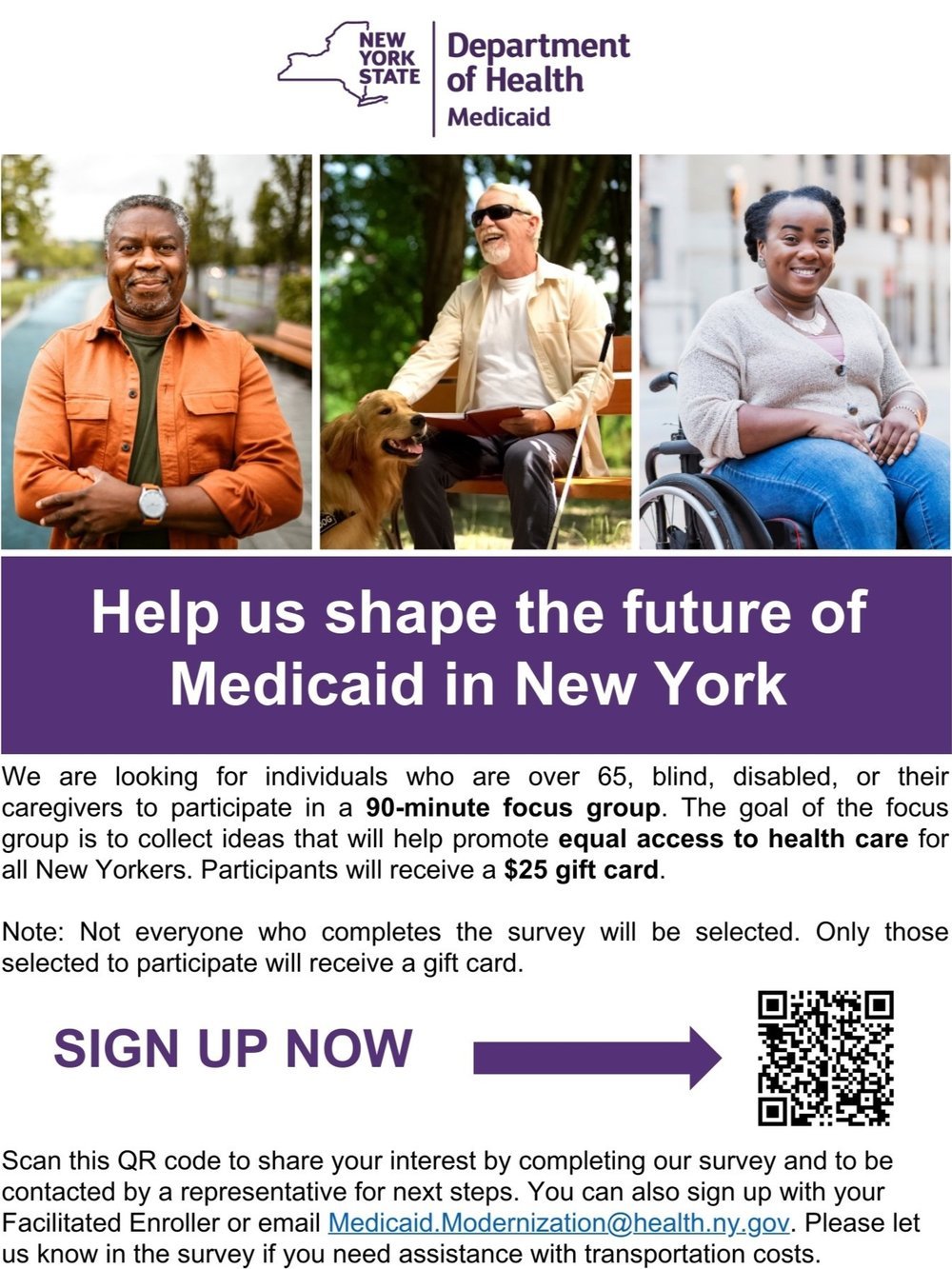
New York State has recently changed how it provides Long Term Care for Medicaid recipients. If you are 65 or older and need 120 days or more of nursing home-level care, you are now required to enroll in a Managed Long Term Care (MLTC) Plan.
These plans manage your full Medicaid coverage and make decisions about:
The amount of care you receive at home
The types of services you’re approved for
Whether you can safely remain at home
You have the right to appeal any decisions made by your MLTC plan.
Our team can help answer your questions about Medicaid Managed Long Term Care and assist you with appealing plan decisions when necessary.
The work of the Health Unit in defending against nursing home and assisted living facility eviction is made possible in part by a grant from The New York Bar Foundation.