Another Voice: Nonprofit guardians provide services that the New York State system can’t

Published December 30, 2025 via The Buffalo News

Guardianship under Article 81 of the Mental Hygiene Law is one of New York’s most important protections for people who can no longer safely care for themselves because of illness, injury or disability. It is designed to be used as a last resort, and only when family are unable to do so. It is often the only option for individuals who have been subjected to elder financial exploitation.

As federal actions weaken the social safety net, guardianship is increasingly being asked to fill in the gaps . A recent cost-benefit analysis shows how impactful a person-centered guardianship model can be. According to Project Guardianship, the model helped save an estimated $142 million in Medicaid costs by preventing unnecessary nursing home placements, reducing hospitalizations and recovering liens.

When combined with savings from avoiding shelter placements for individuals at risk of homelessness, total public cost reductions reached $155 million to $166 million – for only 236 clients. That amounts to nearly $67,000 saved per person per year. If scaled statewide, a fully resourced, person-centered guardianship system could save New York up to $1.9 billion annually.

Some have suggested creating a statewide public guardianship program. But a government-run model is not the answer. States that rely on public guardianship often face high caseloads, and limited flexibility that make it harder to provide individualized, person-centered support.

Nonprofit guardianship programs employ social workers, accountants, and bookkeepers alongside attorneys. The work is 24/7. It requires knowing a person’s history, preferences, community, and goals.

Nonprofit guardianship providers are better positioned to deliver that level of care. They can build long-term relationships and respond quickly when a client’s needs change. They are more accountable to their local communities .

Cost-benefit analysis makes clear that the answer is strengthening the nonprofit guardianship providers already doing this work - not creating another bureaucracy.

As Gov. Kathy Hochul prepares her budget address, we urge her to prioritize investment in a robust nonprofit guardianship model. By choosing proactive investment over reactive crisis management, New York can continue to be a leader in aging policy.

View article here: https://buffalonews.com/opinion/article_796f4218-d1f6-403d-926f-2ced248ebb0e.html
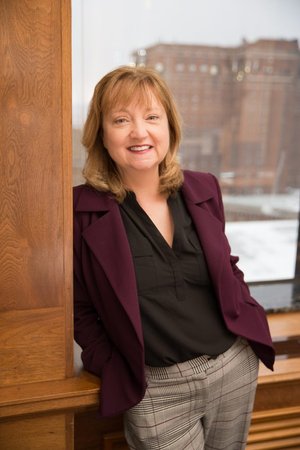
Karen L. Nicolson, Esq. | Chief Executive Officer

Karen L. Nicolson, Esq. has been CEO of the Center for Elder Law & Justice since February of 2000. As CEO, she feels privileged to support its mission to utilize the legal system to help our clients live independently and with dignity. In addition to direct civil legal services, CELJ is a trustee for the Western New York Coalition Pooled Trust for disabled persons in Western New York with over 11 million dollars under trust. Ms. Nicolson supervises the management of the trust and works with its board and fellow trustees to help set policy and investment strategy. Finally, CELJ is court-appointed Article 81 Guardian for more than 100 low-income individuals.

Ms. Nicolson graduated from the SUNY Buffalo School of Law in 1989. She currently serves on the New York State Bar Association’s Committee on Legal Aid and Co-Chairs the LiveWell Erie County Task Force, Older Adults Subcommittee. In addition, she serves on the Elder Justice Working Group through the NYS Unified Court System under the leadership of Judge Deborah Kaplan, Statewide Coordinating Judge for Family Violence Cases. She was also a founding a member of the Advisory Committee of the Crime Victims Legal Network Project.

The Erie County Bar Association selected Ms. Nicolson as the 2018 Lawyer of the Year.  She is the winner of the 2018 SUNY UB Law School Distinguished Alumni Award for Public Service and a 2018 Business First Woman of Influence. Ms. Nicolson received the 2016 Denison Ray Legal Services Director Award, was named a National Federation for Just Communities Leader in 2010, named in 2015 & 2016 to Buffalo Business First’s Legal Elite and was the 2015 The Amherst Senior Citizen’s Foundation Senior Community Leader. She is a member of the Health Foundation of Western New York’s 8th cohort of Health Leadership Fellows. Recently, she was nominated as a finalist for the Community Foundation of Greater Buffalo’s Cause Award, in celebration of its centennial year.

Prior to becoming CEO, Ms. Nicolson was a staff attorney with CELJ for eleven years; before that, she worked briefly at the Legal Aid Bureau of Buffalo. Ms. Nicolson served on the William B. Hoyt Memorial Children and Family Trust Fund Advisory Board. She is a past chair of the Board of Directors of the Western New York Law Center and past Secretary of the Erie County Bar Foundation. She is a past chair of the Erie County Bar Association’s (ECBA) Elder Law Committee and a recipient of the Special Services Award from the ECBA. She frequently lectures on elder abuse, pooled trust and elder law issues. Ms. Nicolson lives in Amherst, New York with her husband, Thomas Smith, and their daughter, Haley.

Next
Next

Issues & views: an interview with kathy kanaley, Supervising Social Worker